
Revolvers as Objects of Mechanical Heritage
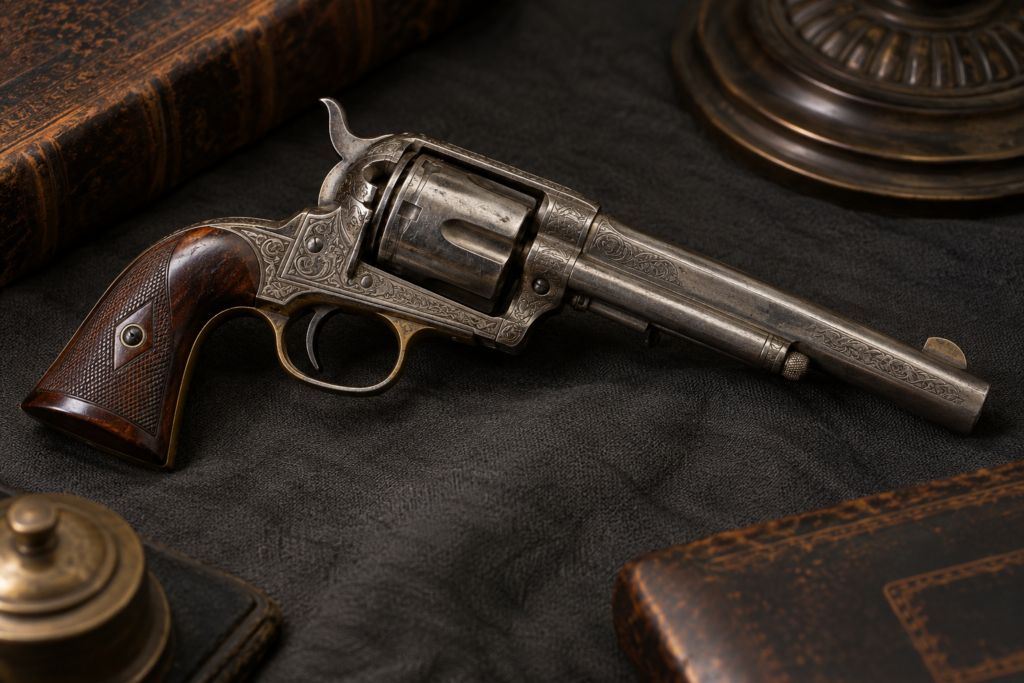
A revolver can be appreciated as a compact example of mechanical heritage. Its recognizable form draws attention to the relationship between industrial design, materials, and the expectations of different historical markets.
Look beyond the familiar outline
Frame proportions, cylinder shape, grips, and finish differ widely across revolver designs. Small changes may reflect manufacturing developments, intended uses, or stylistic preferences.
The most useful comparisons rely on documented examples. A photograph can illustrate a broad difference, but it should not stand alone as proof of a model’s exact identity.
Craftsmanship and production
Some revolvers display decorative engraving or carefully finished grips; others emphasize standardized manufacture. Both can be historically significant. An ordinary production example may reveal more about a period’s industrial capacity than an exceptional presentation piece.
Wear should be described honestly. Signs of age can contribute to historical understanding, but condition does not automatically establish authenticity.
A record for future readers
Use clear photographs, record visible markings privately where appropriate, and cite the references behind identification. Keep ownership stories separate from manufacturing facts when they rest on different evidence.
Do not dismantle a collectible simply to satisfy curiosity. Qualified examination may be appropriate when condition, authenticity, or preservation raises questions.
Mechanical heritage is more than admiration for a mechanism. It includes the makers, workers, owners, and institutions connected to an object. Exploring those relationships turns the revolver from a familiar silhouette into a subject with depth and human context.