
War Fans: Distinguishing Martial Objects from Everyday Fans
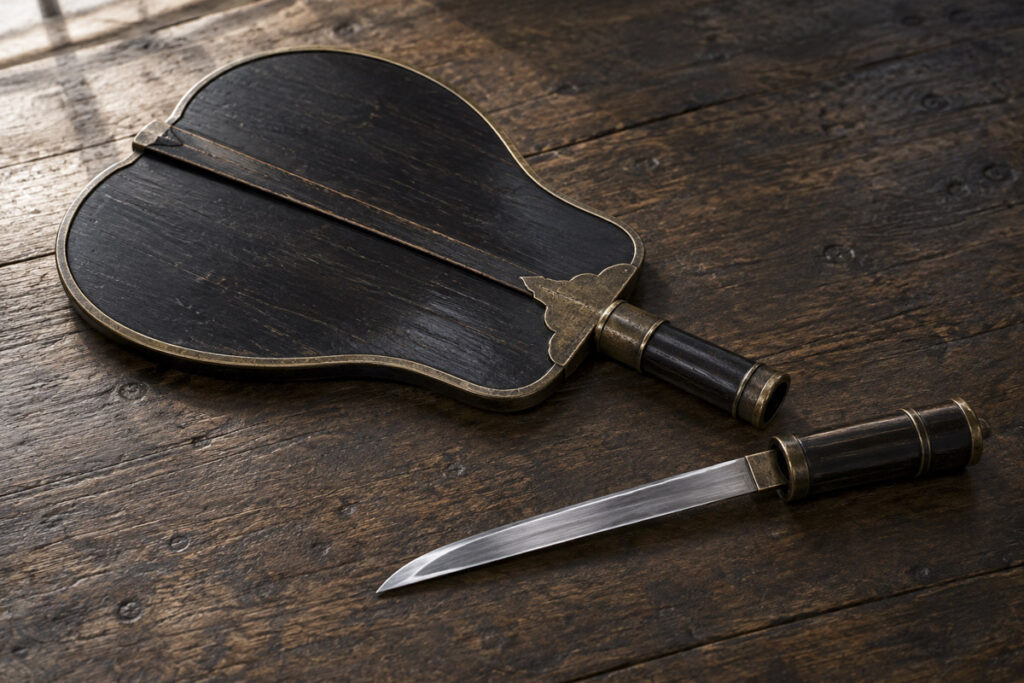
Fans can belong to everyday dress, ceremony, performance, or military culture. A martial-looking fan should therefore be studied in its specific context rather than identified from dramatic appearance alone.
Names are not interchangeable
The Metropolitan Museum of Art identifies a fixed Japanese war fan as a gunbai and explains its signaling role. That documented example should not be treated as a definition of all folding fans or all martial-associated fans.
Construction, material, and form matter. A rigid object and a folding example may look related while belonging to different contexts.
An unusual object is still an exception
The Met’s named example includes an unusual concealed feature, which its catalog discusses in relation to collecting. A researcher should describe such a feature as specific to that object, not generalize it to every war fan.
Curatorial records are most useful when their scope remains clear. Distinguish the individual specimen from the wider category and avoid projecting its history onto a modern reproduction.
Read the materials and provenance together
Photograph the entire form, mounts, handle, and surface details. Record the source behind any maker, date, or cultural attribution. Similar decoration does not establish identical origin.
For a collection or exhibition, explain whether an item is documented historical material or a contemporary display piece. A generated featured image is an illustration of the topic, not authentication of a specimen.
War fans reward careful interpretation because they connect recognizable design with varied social roles. The goal is to make those differences clearer rather than blur them into a single legend.
Source: The Met: War Fan (Gunbai).