
Traditional Bows: Wood, Form, and Archery Heritage
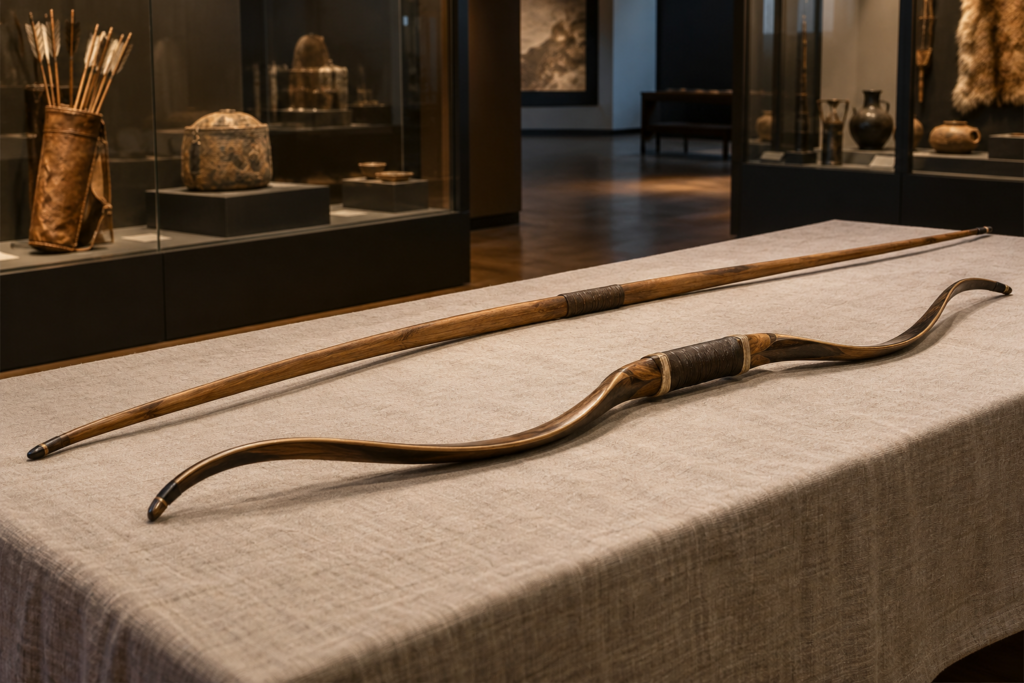
A traditional bow can express a close relationship between material and form. Wooden bows in collections also connect archery to regional craftsmanship, sporting heritage, and historical interpretation.
Tradition contains variety
The phrase traditional bow covers a broad range of designs. Longbows and recurved forms are recognizable examples, but familiar labels should not erase differences between cultures, periods, and makers.
Material appearance alone cannot establish origin or construction. Documented examples and specialist references are useful guides when identification matters.
Craft and cultural context
Bow shape, surface treatment, and associated accessories can help tell a larger story. An exhibition may connect a bow to sporting practice, local workshops, or the history of a particular collection.
Historical interpretation should avoid treating every bow as interchangeable. A modern sporting reproduction and an older museum object can look related while answering different questions.
Collecting with care
Record dimensions, visible condition, acquisition history, and the source behind an attribution. Photograph the full form and important details. Fragile objects should not be flexed or strung merely for presentation.
For antique examples, consult a qualified conservator about supports and environmental conditions. A bow’s historical importance can depend on retaining materials that would be lost in an attempt to make it usable.
Traditional bows offer a rich subject because they connect recognizable shape with individual craftsmanship. Studying them carefully lets readers appreciate that form while keeping cultural claims and collecting records grounded in evidence.