
Photographing Firearms for a Collection Record
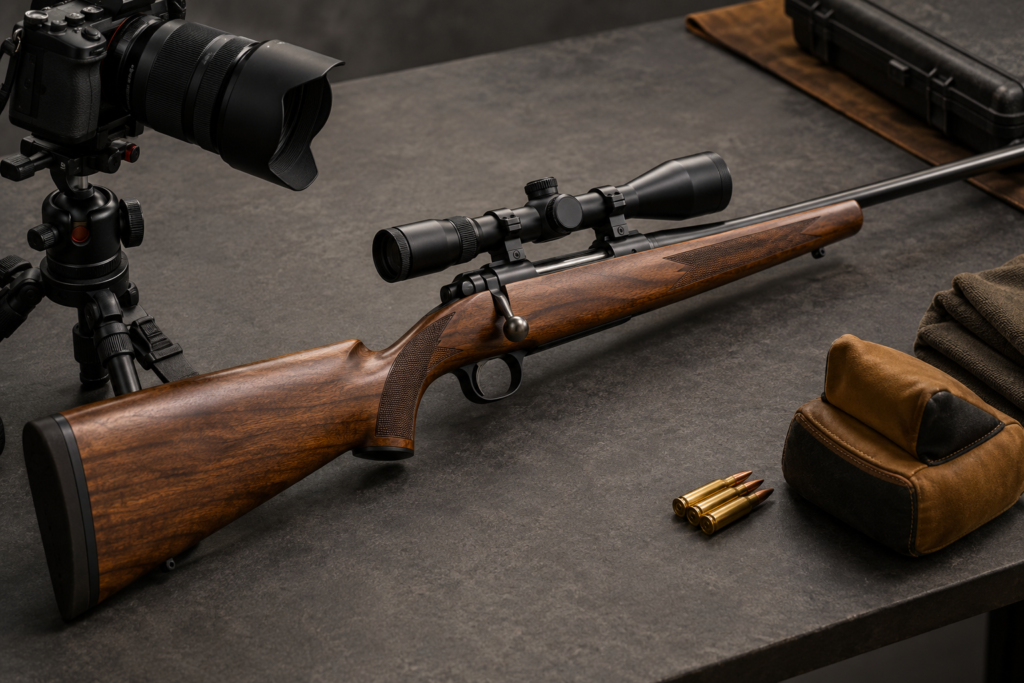
Collection photography creates a visual record that can support identification, condition reporting, research, and insurance documentation. The goal is clarity and consistency rather than a dramatic image that hides important details.
Begin with a controlled setting
Use a neutral background and even lighting so surfaces remain readable. Dark cloth can suit a magazine image, but it may obscure dark metal in a documentation photograph. Choose the setting according to the purpose.
Have a qualified person establish a safe condition before the photography session. Keep ammunition out of the photography area and avoid unnecessary handling or repositioning.
Record the whole and the details
A complete side view provides orientation. Additional images can document visible markings, stock details, surface wear, and associated cases or paperwork. Keep a consistent sequence so records from different objects are easy to compare.
A scale reference may be useful for internal documentation. Public images should omit private identifying information when appropriate.
Editing should preserve evidence
Adjusting exposure or color for accuracy is different from removing wear or changing markings. Keep unedited originals and record any processing applied to published copies.
Use filenames linked to a collection identifier, and store photographs with the written record. Back up both rather than relying on a single device.
A beautiful featured image and a thorough collection record serve different needs. Producing both allows the object to be presented attractively while preserving an honest, useful record of its condition and identity.