
Museum Displays and the Stories Firearms Tell
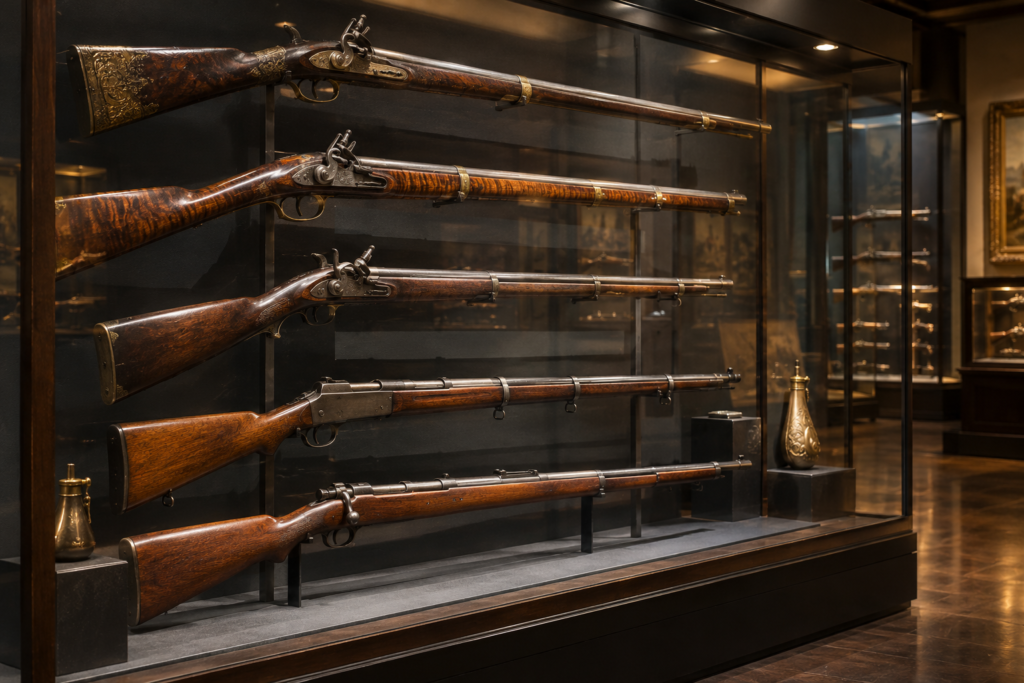
A museum display gives firearms a setting in which they can be studied as historical objects. The strongest displays explain why an object matters instead of relying only on dramatic appearance or a famous model name.
Choose a clear interpretive question
An exhibition might explore craftsmanship, industrial production, sporting traditions, or changes in design. A defined question helps determine which objects belong together and what visitors should learn from the comparison.
A crowded wall of similar firearms can be visually impressive while leaving the story unclear. Fewer objects with well-supported context often make a more effective display.
Objects need evidence
Labels should distinguish confirmed facts from interpretation. Dates, maker attributions, and ownership claims should rest on reliable records. Where uncertainty exists, acknowledging it gives visitors a more honest account of historical research.
Associated documents, photographs, and cases can expand the story beyond the firearm. They help connect an object to production, trade, recreation, and everyday life.
Respectful presentation
Firearms have varied histories, including sport, conflict, and personal ownership. Responsible interpretation recognizes those contexts without romanticizing harm or flattening complex events into spectacle.
Security and conservation should be planned with qualified museum professionals. Display supports and environmental conditions are part of preserving an object, not merely making it attractive.
A successful exhibit leaves visitors with better questions and a clearer understanding of evidence. It shows that a firearm is simultaneously an engineered object and a witness to the world that produced it.