
From Flintlock to Modern Firearms: A Story of Changing Design
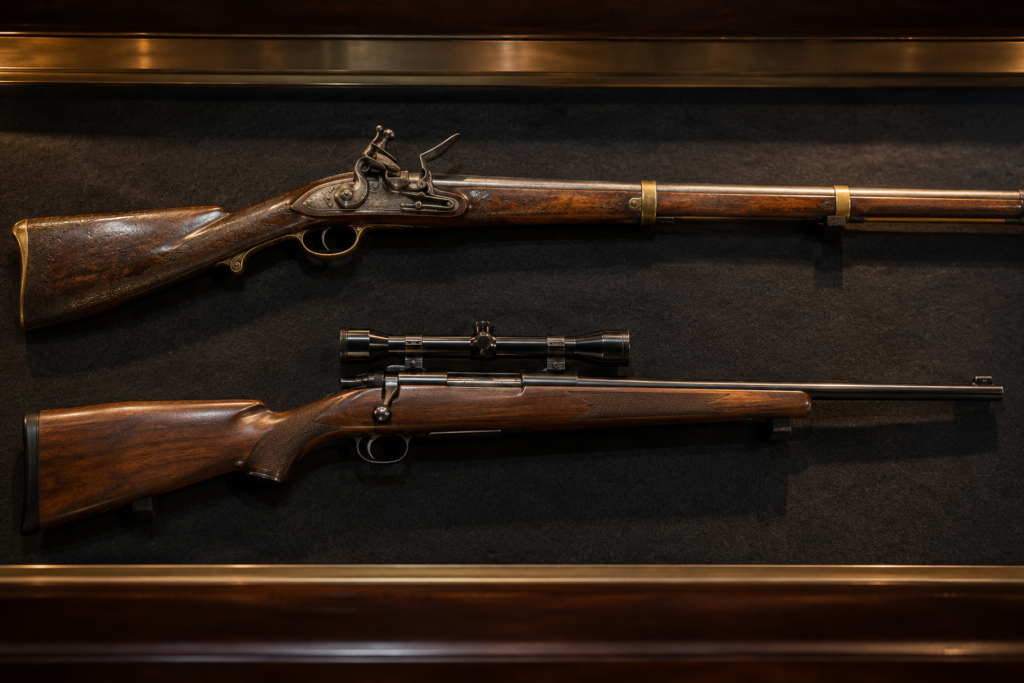
A firearm can be read as a record of the period that produced it. Materials, manufacturing methods, and the expectations of its users all leave visible traces. Looking across different eras reveals a story broader than a sequence of new mechanisms: it is also a story of industry, craftsmanship, and changing sporting traditions.
Design responds to its surroundings
Early firearms often show extensive handwork in their wood and metal surfaces. Later examples increasingly reflect standardized production and the ability to make interchangeable components. These differences influence not only appearance but also the questions collectors ask about originality, replacement parts, and manufacturing variation.
Changes in ignition and ammunition also shaped the form of firearms. Flintlock, percussion, and cartridge-era examples offer distinct visual identities. A general history can compare those identities without assuming that every region adopted new technology at the same pace.
Progress was not a straight line
Older and newer designs frequently existed alongside one another. Cost, local manufacturing capacity, personal preference, and intended use helped determine what remained in circulation. A carefully made older firearm could retain cultural or collecting significance long after another design became common.
Read the whole object
For an exhibition or collection record, note the stock, overall proportions, finish, maker attribution, and documented history together. A dramatic mechanism tells only part of the story. Repairs, wear, and modifications can reveal how an object moved through different hands.
The most rewarding approach combines visual observation with reliable references. Museum collections and specialist histories help connect a firearm to its wider context while keeping uncertain dates or attributions clearly identified as uncertain.