
Photographing Blades and Bows for Collection Records
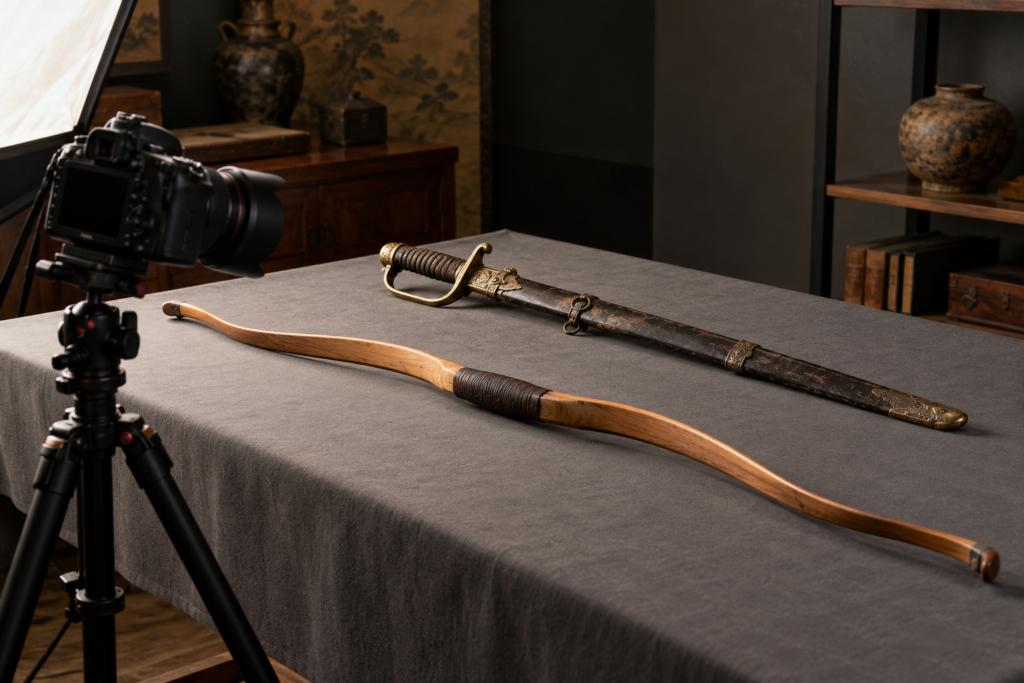
Photographing blades and bows for a collection record requires a different priority from creating a dramatic magazine cover. Documentation should make identity and condition easier to review.
Plan for clarity
A neutral background and controlled light help separate an object’s outline from its surroundings. Long bows and swords need enough room for a complete view without distorting their proportions.
Arrange a safe, stable setup before handling the object. Protect exposed edges and do not tension a bow for a photograph. Fragile historical pieces may require qualified handling or conservation support.
Record several views
Start with the complete object, then add details of markings, grips, fittings, sheaths, and visible wear. Associated accessories should have their own images rather than appearing only as background props.
Use consistent framing when comparing several examples. A separate scale reference can help an internal record without needing to appear in a public editorial image.
Keep the evidence intact
Retain original files and avoid editing out corrosion, scratches, or repairs. Adjust exposure for accuracy, and distinguish documentation images from styled illustrations.
Link filenames to a collection identifier and store photographs with the written entry. Back up the record so its usefulness does not depend on one device.
Good photographs let future readers ask new questions about an object. A clear visual record complements research and supports honest interpretation long after the original photography session is over.