
Museum Interpretation of Blades and Archery
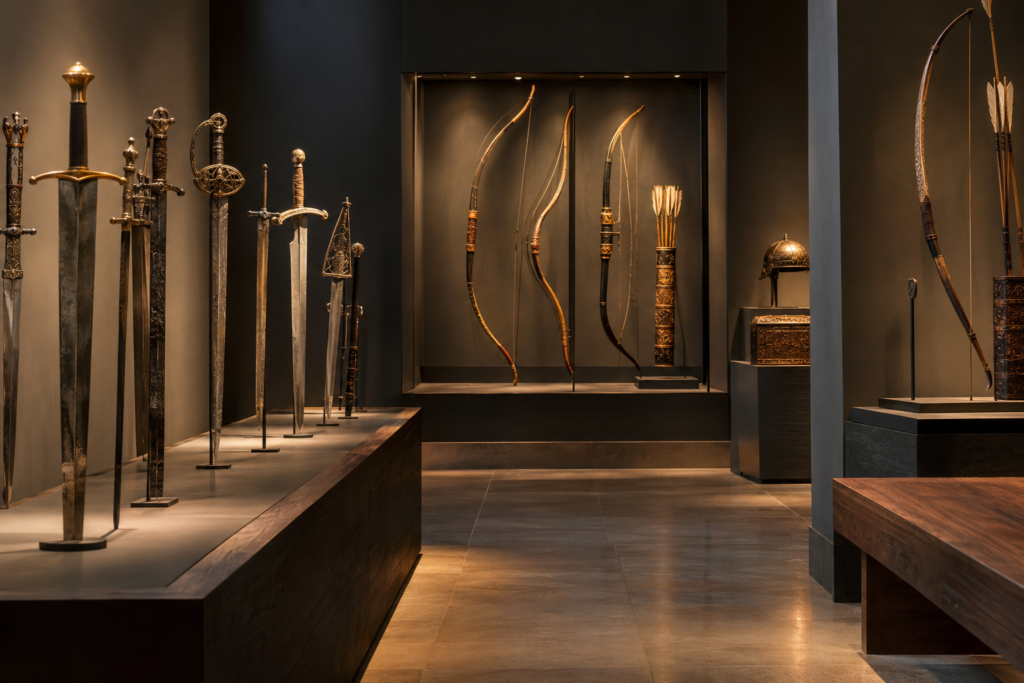
Museum displays can present blades and archery equipment as witnesses to craftsmanship, sport, trade, and historical change. The best interpretation explains relationships rather than arranging objects only for dramatic effect.
Begin with a question
A display might examine materials, a regional workshop tradition, or the development of sporting culture. A defined focus helps determine which objects belong together and what comparison visitors should make.
Swords, knives, bows, and arrows should not be presented as a single undifferentiated history. Their contexts may differ even when they occupy the same gallery.
Make evidence visible in the story
Dates, maker attributions, and ownership claims should be supported by dependable records. Where identification remains uncertain, interpretation can explain that uncertainty instead of concealing it.
Documents, photographs, and accessories can connect objects to makers and communities. They also help visitors understand why an ordinary example may deserve attention.
Balance appeal and responsibility
Weapons may have associations with conflict as well as craft and sport. Interpretation should acknowledge those histories thoughtfully without making harm a spectacle.
Display arrangements must respect conservation and visitor safety. Qualified museum professionals can advise on supports, security, and the needs of fragile materials.
A successful gallery leaves visitors with more than recognition of a familiar shape. It gives them a framework for understanding how objects are identified, why evidence matters, and how craftsmanship connects to a wider human story.